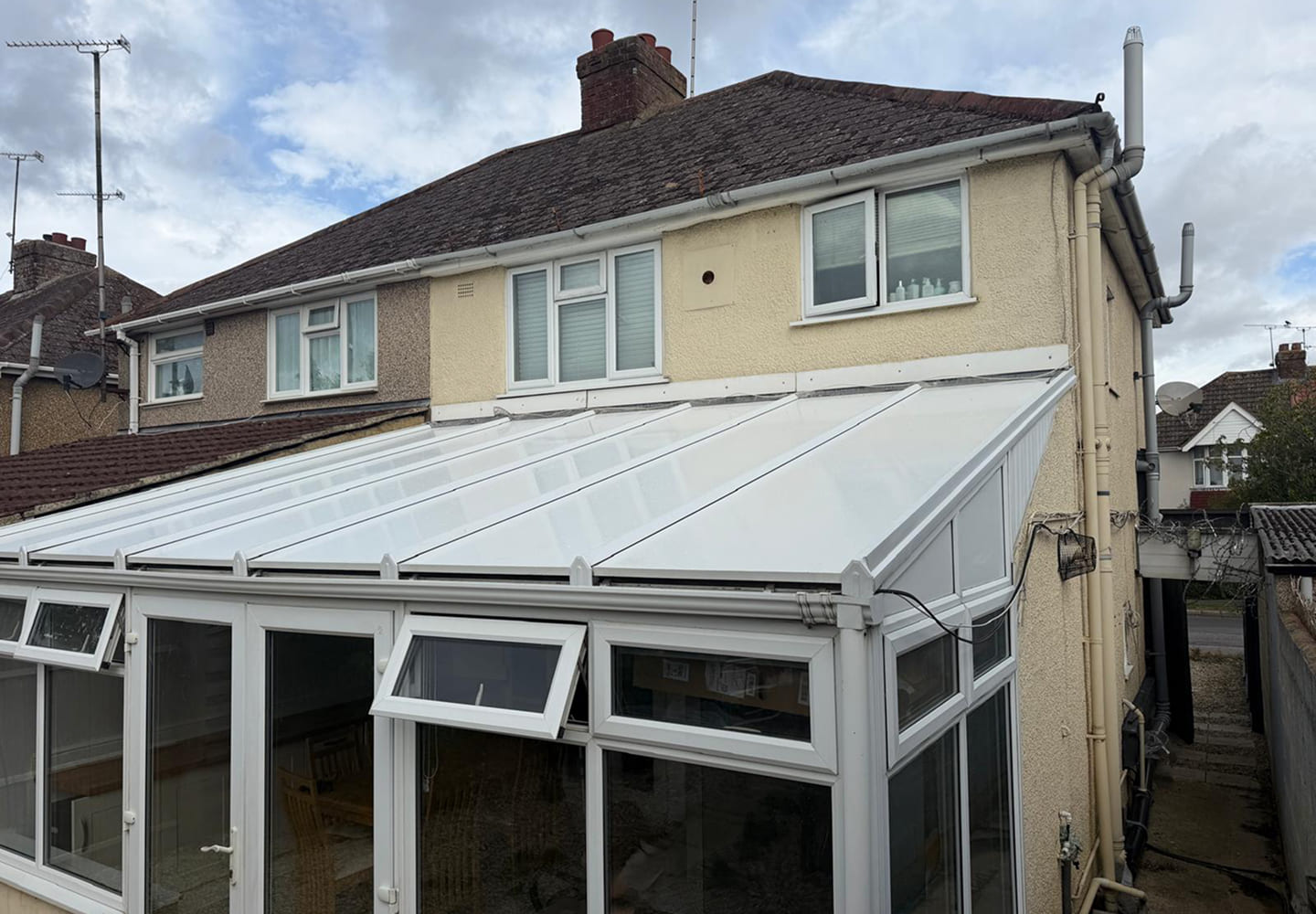
If your conservatory turns into a greenhouse in summer and an ice box in winter, you’ve probably come across lightweight insulated roof panels as a fix. They promise a warmer room, lower bills, and a space you can actually use all year. But do they live up to the hype, and are they worth the cost?
This guide breaks down what these panels actually do, how much they cost, and what U-value really means for your comfort.
What Are Lightweight Insulated Roof Panels?
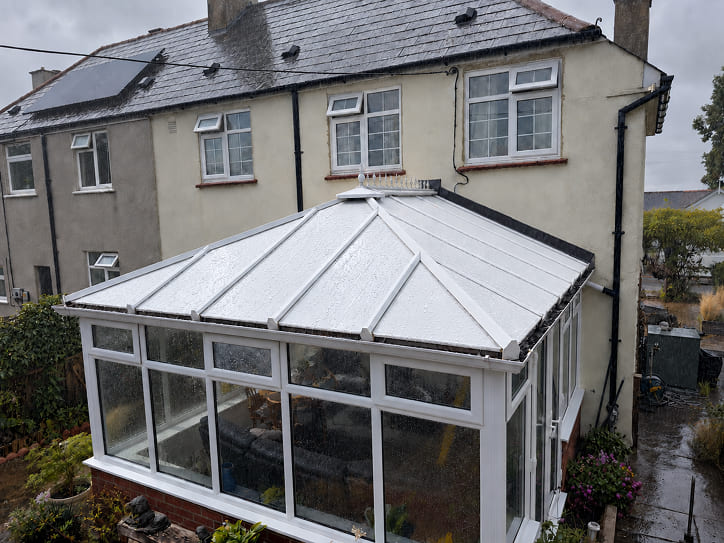
Lightweight insulated roof panels are a modern replacement fo glass conservatory roofs. They’re built from layers of insulating foam sandwiched between weatherproof outer skins, often tiled or textured to match your home’s existing roof.
Unlike a full roof rebuild, most systems fit directly onto your existing conservatory frame. That means:
- No planning permission in most cases (always check local rules)
- Installation usually completed in 1-2 days
- No need to replace windows, doors, or the frame itself
Because the panels are made from composite materials rather than solid tile or brick, they’re far lighter than a traditional roof — hence “lightweight” — while still delivering strong thermal performance.
Key Benefits of Insulated Roof Panels
Better temperature control is the headline benefit. A well-insulated roof keeps heat in during winter and blocks solar gain in summer, so the room stays usable year-round.
Other benefits worth knowing about:
- UV protection – less sun-fading on furniture and flooring.
- Energy savings – less reliance on heaters or fans to keep the room comfortable.
- Added property value – a usable, all-season conservatory is a stronger selling point than a room that’s empty half the year.
Insulated Conservatory Roof Panels Cost: What to Expect
The most common question homeowners ask is simple: what’s the real insulated conservatory roof panels cost ? Pricing depends on a few factors, but here’s a general breakdown for the UK market.
| Conservatory Size | Approximate Cost Range |
| Small (up to 3m x 3m) | £4,000 – £6,500 |
| Medium (3m x 4m) | £6,500 – £9,000 |
| Large (4m x 5m+) | £9,000 – £13,000+ |
Several things affect the final insulated conservatory roof panels cost:
- Roof size and pitch – steeper or larger roofs need more material and labour.
- Panel type – tiled finishes typically cost more than flat composite panels.
- Internal finish – plastered ceilings with spotlights push the price up compared to a simple panelled interior.
- Access and structural checks – older frames may need reinforcing before panels go on.
It’s always worth getting a few quotes, since prices can vary noticeably between installers for the same specification.
Understanding U-Values (Without the Jargon)
U-value measures how much heat escapes through a material — the lower the number, the better the insulation. It’s usually shown in W/m²K.
For context:
- Standard lightweight insulated roof panels typically achieve a U-value of 0.15–0.18, which is comparable to, or better than, a house wall.
That difference is why homeowners notice such a dramatic change in comfort after switching. A lower U-value means less heat lost through the roof in winter and less heat gained in summer, which directly affects your heating bills and comfort.
A general rule: if your current roof’s U-value is above 1.5, you’ll likely feel a big improvement after installing insulated panels.
Are They Worth It? Weighing the Pros and Cons
Pros:
- Usable conservatory all year, not just spring and autumn
- Lower energy bills from reduced heat loss
- Quieter room during rain and wind
- Often quicker and cheaper than a full extension
Cons:
- Slightly reduces natural light compared to glass (though rooflights can offset this)
- Requires a structurally sound existing frame
For most homeowners who use their conservatory regularly — as a dining room, office, or living space — the investment pays off through comfort and usability, even before factoring in energy savings.
Choosing the Right Installer
Not all panel systems perform the same, so it pays to ask installers direct questions:
- What U-value does the panel achieve?
- Is the product guaranteed, and for how long?
- Can they show before-and-after photos or references?
Rosy Panels specialises in lightweight insulated roof panels designed for UK weather, with a focus on strong thermal performance and a finish that matches your existing home. Getting a tailored quote is the best way to understand exact costs for your conservatory’s size and shape.
Final Thoughts
Lightweight insulated roof panels offer a practical way to reclaim a conservatory that’s currently too hot, too cold, or too noisy to enjoy. With costs starting around £4,000 and U-values that rival a house wall, the upgrade often pays for itself in comfort and usability alone. Getting a few quotes and comparing U-values is the best next step toward a conservatory you’ll actually use all year round.