A roof feels like a lid. In truth, it is a load. Every kilo on top passes down through the frame, the base and into the ground. So the real question is not about looks. It is about weight.
Can a conservatory frame take a solid roof? Often yes, but only after checks. This guide shows what to check and in what order. It also shows which options weigh least.
How the load travels
Rain, snow, wind and the roof’s own weight all load the rafters. That load moves into the wall plate and then the frame uprights. The frame passes it to the base. The base passes it to the ground.
A glazed roof was designed around its own weight. A polycarbonate roof weighs less, so its frame may be built lighter still. LABC speaks for council building control teams in England and Wales. Its guidance warns that frames under polycarbonate may only be reinforced for that light load.
What to check, in order
1. The frame
Many uPVC frames hide a steel core. Some do not. A surveyor may drill a small test hole, or use a magnet, to find out. Without reinforcement, you may need new frames or extra posts. A solid roof on an old conservatory frame can work, but only when the frame has proved it can cope.
2. The base and foundations
The ground must cope with the new load as well. LABC says trial holes should be dug to see what is there. In most cases, it notes, a 150mm concrete strip or slab on original ground will do. Drains, tree roots and made-up ground need more thought.
3. The junctions
A solid roof must stay weathertight where it meets the house wall, the gutters and any abutments. Ask the installer to explain each detail before work starts.
What the survey result means
A survey should end with a clear finding for the frame and for the base. Use this table to see what each result tends to mean.
| What the survey finds | Sensible next step |
| Steel-reinforced frame and a sound base | Compare lighter and heavier roof options, then ask building control. |
| No reinforcement in the frame | Strengthen or replace the frame before any solid roof. |
| Weak, shallow or unknown foundations | Dig trial holes and design the support first. |
| A frame built for polycarbonate | Treat it as light-duty until a survey proves otherwise. |
These are common patterns, not rules. Your own surveyor’s advice comes first.
Warning signs to raise before any roof change
Some symptoms suggest the structure is already moving or under strain. Doors that stick, frames that bow, cracks in the base wall and gaps at the house junction are examples. Each can have a harmless cause. Each is worth a survey before you add weight.
Heavy and light options
The weight of the roof decides whether your frame can carry it. Conservatory roof systems UK homeowners can choose from run from glass and polycarbonate to insulated panels and tiled systems. How heavy is a solid conservatory roof? It depends entirely on the system, and weights differ widely between products. Common options include:
- Lightweight insulated roof panels with a foam core. Rosy Panels supplies Stadur panels of this type. Weight rises with thickness, so ask for the figure per square metre.
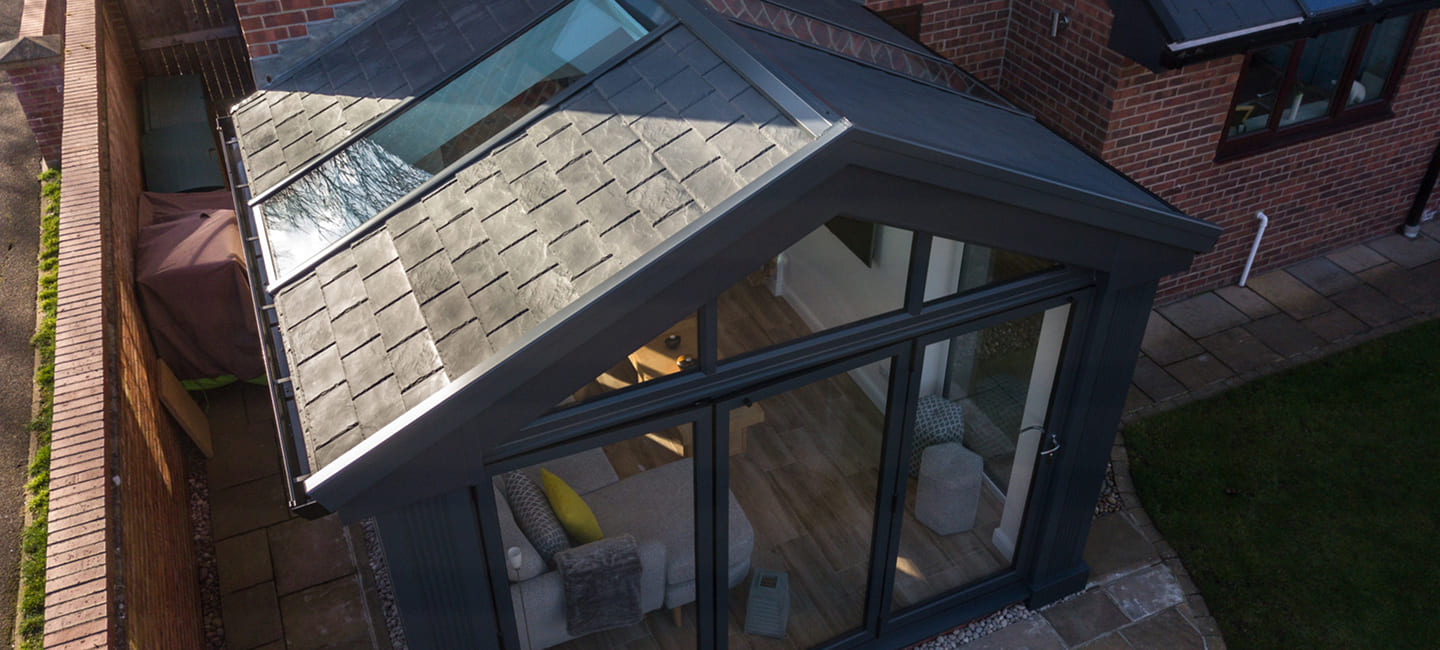
- Lightweight composite solid roofs. LABC describes their extra load as small next to an existing glazed roof.
- Tiled roofs with synthetic tiles. One UK home-improvement guide puts these at under 20kg per square metre.
- Heavy tiles such as concrete. Most conservatory structures cannot carry these without new support.
A lightweight conservatory roof is not automatically safe. “Lightweight” is relative. Ask for the weight per square metre, then have your frame checked against that figure.
What the rules mean for your frame
Solid conservatory roof building regulations come down to a few tests. Most conservatories are exempt from building regulations. LABC’s guidance sets out the usual conditions. The building must be at ground level and under 30 square metres. It must be thermally separated from the house. The house heating must not extend into it. It must also keep a significant share of glazed roof and walls.
A solid roof can break that last condition. Then building control looks at the roof, the frame, the foundations and the insulation. Insulated panels are opaque too. Replacing all the glazing with panels can count as a big cut, so ask building control before you order.
The planning side is a separate question. Rules also differ in Wales, Scotland and Northern Ireland. LABC’s guidance dates from 2013, so check the current position with your own council.
Questions to ask about load
If you are leaning towards a lightweight conservatory roof, put these to every installer:
- What does the finished roof weigh per square metre?
- Have you checked whether my frame has a steel core?
- What did you find under the base, and how?
- Who signs off the structure, and who contacts building control?
Clear answers suggest the firm has done this before. Vague ones are a reason to keep looking. A conservatory roof replacement is a structural job, so treat it like one.
Start with a survey, not a sample
Before you pick a roof, ask a qualified person to survey the frame and the base. Get the result in writing. Then choose the roof your structure can carry. That order avoids costly surprises. To discuss panel options for your frame, contact Rosy Panels on 01480 597 107.
Whichever of the conservatory roof systems UK suppliers offer you choose, the survey comes first.