Some are. Many budget roof sheets and older opaque panels use PVC. Others use polycarbonate, glass or aluminium. So the honest answer is that it depends on the panel.
This article looks closely at one type: the insulated sandwich panel with Stadurlon faces. These are PVC-free conservatory roof panels. You will see what sits inside them, what Stadurlon is and which company makes it. It is written for homeowners and installers who want plain answers.
So, what are conservatory roof panels made of?
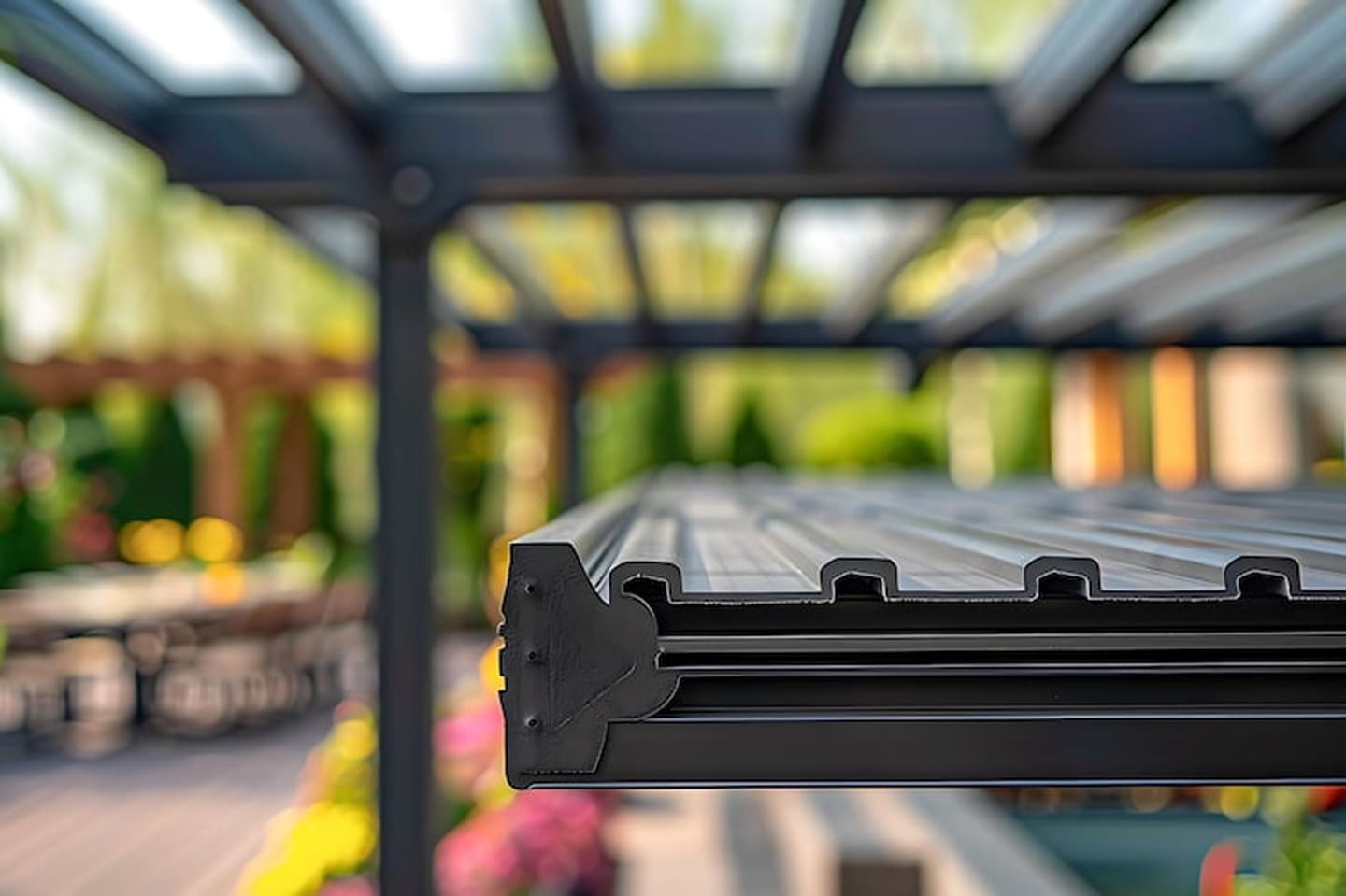
Most insulated panels follow a sandwich design. Two thin skins hold a thick core between them. A strong bond joins all three layers.
Picture a sandwich where the filling does the real work. In a roof panel, the filling is foam. It slows the flow of heat. The skins protect the foam and give the panel its finish.
The core
The Stadur FB-1/SL panel has a core of extruded polystyrene, known as XPS. Its product listing describes the foam as low in water absorption. The foam is corrugated so the skins grip it better.
The skins
The skins are the outer faces. They face sun, rain, frost and knocks. They can be aluminium, PVC or another plastic. The choice changes the look, the weight and how the panel ages.
Why PVC turns up in roof panels
PVC is common, cheap and easy to form. One UK home-improvement guide calls a PVC roof the cheapest to buy and fit. Opaque PVC panels are also sold for lean-to roofs, carports and pergolas.
That explains why PVC sits at the budget end of the market. It also explains why more buyers now ask what their panel is made of.
What is Stadurlon?
Stadurlon is the skin on the FB-1/SL panel. Several distributors describe it as a PVC-free, high-performance plastic. You may also see these listed as non-PVC conservatory roof panels. The supplier’s website says Stadurlon was developed with BASF in Ludwigshafen as an alternative to PVC.
The same site says the facing suits temperatures from -20°C to +120°C. It also has a UV-resistant surface. The standard colour is white.
What “PVC-free” does and does not prove
Some buyers prefer to avoid PVC. Others simply want to know what they are paying for. Either way, PVC-free conservatory roof panels give you a clear material to ask about.
But PVC-free does not mean better insulation. The core does most of that work. A PVC-free skin on a thin core will insulate less than the same skin on a thicker one. So ask about both.
Check the exact product, too. Stadur also sells panels with PVC faces. A listing for one range does not describe the whole catalogue.
Be wary of vague words such as “eco” or “advanced material”. A clear answer names the skin, the core and the maker.
What the FB-1/SL listing tells you
A good product listing is specific. This one gives you the following:
- Skins: Stadurlon, a non-PVC plastic.
- Core: extruded polystyrene, fire class E under EN 13501-1.
- Thicknesses: 17mm, 24mm, 28mm and 35mm.
- Sheet sizes: 3000 x 2000mm, plus 4000 x 2000mm in 24mm and 35mm.
- Working range: -20°C to +120°C.
That is the level of detail to expect from any seller. If a listing cannot match it, ask more questions.
Who makes the panels
Stadur makes them at Karstädt in Germany. The company says it began in 1982 and is now a family firm in its second generation. It calls itself one of Europe’s largest makers of sandwich elements.
When you search for insulated roof panels manufacturers, you meet makers and resellers side by side. Ask which one you are talking to. Rosy Panels is a UK supplier. It stocks Stadur panels and sells them to installers and trade customers. It does not make them.
That difference matters. A maker can explain how a panel is built. A supplier can explain stock, sizes and delivery.
A conservatory roof is only one use of the sandwich idea. The company’s own apprenticeship listing mentions shop displays, window profiles, shower elements and trailer walls. So when you ask about Stadur conservatory roof panels, name the exact product code. FB-1/SL is the one covered here.
From factory to roof: who answers what
A panel passes through three sets of hands. Stadur makes it in Germany. A UK supplier holds stock and ships it to installers. The installer cuts, fits and seals it on site.
Each link has its own job. Ask the maker, or its data sheet, about materials. Ask the supplier about sizes, stock and delivery. Ask the installer about fitting and workmanship. Sending the right question to the right party saves a lot of back and forth.
Five checks before you buy any panel
- Name the skin. Is it PVC, aluminium or something else?
- Name the core. Is it XPS, EPS, PIR or another foam?
- Ask for the thickness and the weight per square metre.
- Ask for the fire classification and a data sheet.
- Ask who makes the panel, and where.
Keep the answers. If two sellers give different facts about the same product, check the data sheet or ask the maker.
Back to the opening question: what are conservatory roof panels made of? Usually a foam core and two skins. The skin may or may not be PVC. Whichever of the insulated roof panels manufacturers you consider, ask for the data sheet before you order. For the Stadur specification, ask Rosy Panels.